
Blog
Best Shirt Colors for Office Wear Every Man Should Own

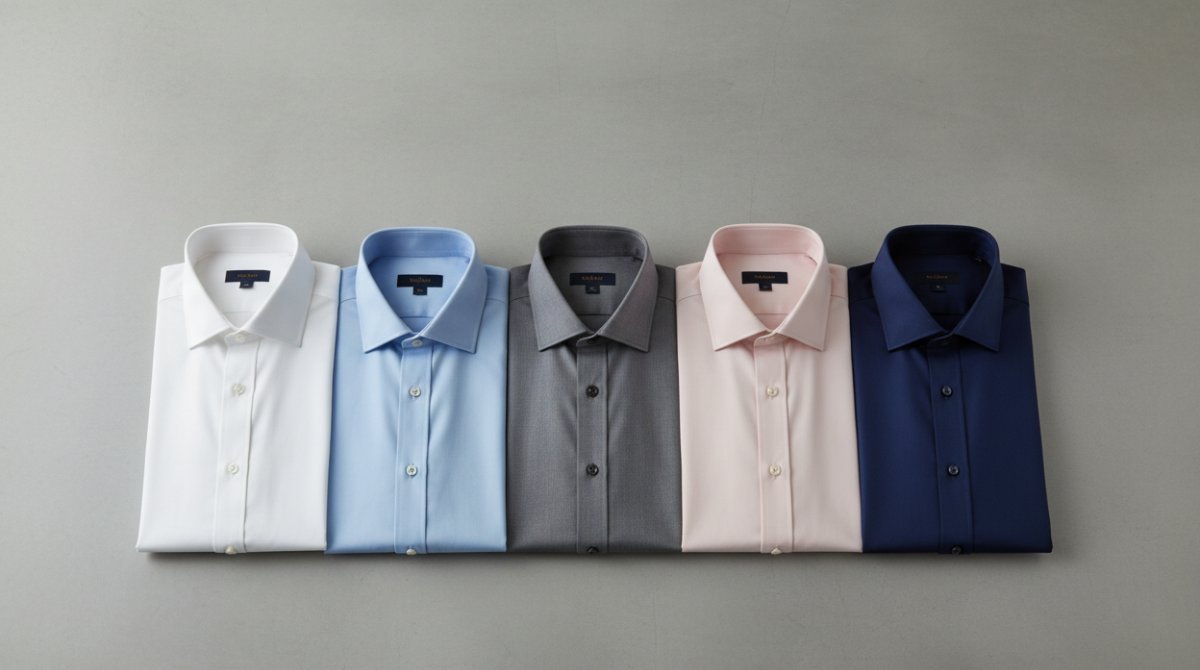
Shirt color shapes how polished, approachable and detail-focused you look at work. It also affects how your face reads under office lighting, video calls and the contrast created by your jacket or trousers.
The right colors reduce daily decision fatigue because they pair cleanly with most ties, belts and shoes. A tight set of dependable shades also helps you stay consistent across meetings, presentations and casual Fridays.
White Shirts The Most Essential Office Staple
A white shirt is the backbone of office wear because it is crisp, high-contrast and universally accepted. It works in strict formal settings and still feels sharp with business casual pieces.

Fabric and opacity matter more with white than any other color. A slightly heavier poplin or twill reduces show-through and keeps the shirt looking structured through a long day.
- Best collars: Spread or semi-spread for ties, button-down for business casual.
- Best patterns: Solid white first, then subtle texture like herringbone for variety.
- Undershirt tip: Choose a skin-tone undershirt to avoid visible lines and contrast.
Once white is handled, adding a few complementary colors makes your rotation feel modern without losing professionalism.
Light Blue Shirts For A Smart Professional Look
Light blue is the easiest color upgrade from white because it keeps the look clean while softening contrast. It reads calm and competent, which fits client calls and internal meetings alike.

In most offices, light blue can replace white on days when you want variety without taking style risks. It also performs well on camera, especially in natural light.
- Best fabrics: Poplin for crispness, pinpoint oxford for everyday durability.
- Best layering: Navy blazer, charcoal suit, or a mid-grey cardigan.
- Best shoe pairing: Brown leather often looks more natural with blue than black.
That versatility is why light blue earns a permanent spot in a practical office shirt collection.
Grey Shirts For Versatile Office Styling
Grey shirts sit between white and darker tones, giving you a refined option that still feels office appropriate. Light grey keeps things bright, while medium grey adds depth under blazers and knitwear.

Grey is also forgiving across seasons because it pairs well with both warm and cool palettes. It can help tone down loud ties or bring balance to patterned jackets.
- Best shades to start: Light grey for broad compatibility, then medium grey for variety.
- What to avoid: Very dark grey in conservative offices, since it can read evening-like.
- Texture advantage: Subtle melange or micro-weave adds interest without looking casual.
With grey covered, you can introduce a color that signals modern style while staying measured.
Pale Pink Shirts For A Refined Modern Outfit
Pale pink can look executive and controlled when the shade is muted and the fabric is smooth. The key is choosing a soft, dusty pink rather than a bright or saturated tone.

This color works best when the rest of your outfit is disciplined. Keep trousers and accessories neutral so the shirt reads confident instead of flashy.
- Best pairings: Charcoal trousers, navy suit, or mid-grey blazer.
- Best tie colors: Navy, burgundy, dark green, or tonal grey.
- Best occasions: Client lunches, presentations and smart business casual days.
After pale pink, navy is the next step for men who want sharper business casual dressing without losing structure.
Navy Shirts For Sharp Business Casual Dressing
Navy shirts bring a sleek, modern feel and create strong contrast with lighter trousers. They also reduce the need for a tie in offices that lean business casual.

Because navy is darker, details stand out more. Prioritize a clean collar shape, a precise fit at the shoulders and buttons that do not look overly casual.
- Best times to wear: After-hours meetings, creative workplaces, or no-tie environments.
- Best trouser colors: Mid-grey, light grey, stone, or tan depending on dress code.
- Watch-outs: Navy can show lint, so keep a small lint roller at work.
With these core shades in mind, the next move is matching them to your specific workplace expectations.
How To Choose The Right Shirt Color For Your Workplace?
Start by reading your office dress code the way others will read your outfit. Some workplaces reward conservative consistency, while others expect tasteful variety.
Lighting, meeting frequency and how often you wear a jacket should guide your color choices. A darker office with fluorescent light often favors lighter shirts, while bright modern spaces can handle deeper tones.
- Highly formal offices: Lead with white and light blue, add light grey only after you have enough basics.
- Business professional offices: White, light blue and grey rotate easily, with pale pink as a controlled accent.
- Business casual offices: Add navy more often, especially when a tie is optional.
- Client-facing roles: Keep most shirts light and clean so your face remains the focal point.
Once you know what your environment supports, matching ties and trousers becomes simple and repeatable.
Best Tie And Trouser Combinations For Office Shirt Colors
Successful combinations rely on clear contrast and a limited palette. When the shirt is light, you can use richer tie colors; when the shirt is dark, simplify everything else.
Use this table as a quick reference for office-safe pairings that look intentional without feeling loud.
| Shirt Color | Tie Options | Trouser Options |
|---|---|---|
| White | Navy, burgundy, charcoal, subtle stripes | Charcoal, navy, mid-grey |
| Light Blue | Navy, brown, burgundy, dark green | Navy, charcoal, medium grey |
| Light Grey | Black, navy, deep purple, tonal grey | Black, navy, charcoal |
| Pale Pink | Navy, burgundy, dark green, grey micro-patterns | Charcoal, navy, mid-grey |
After you have a few reliable combinations, focus on building a collection that covers your week with minimal overlap.
Building A Practical Office Shirt Collection
A practical rotation supports your schedule, laundry habits and the formality level of your calendar. The goal is to own enough shirts to avoid emergency choices while keeping every piece in regular use.
Prioritize fit first, since even perfect shirt colors look off when collars gap or sleeves billow. A clean shoulder line and a collar that sits flat will make every color look more elevated.
- Core set for most offices: Two white, two light blue, one light grey.
- Modern add-ons: One pale pink, one medium grey once the basics are covered.
- Business casual anchor: One navy shirt for no-tie days and smart layering.
Keep patterns restrained so color remains the main styling tool. Fine stripes and micro-checks are easier to repeat than bold prints and help maintain a professional baseline.
Care habits also protect your investment and keep colors looking consistent. Rotate wear days, avoid over-washing and use a collar stay routine if your shirts are prone to curling.
Final Thoughts On Must Have Office Shirt Colors
The strongest office wardrobe starts with a white shirt, then expands through light blue, grey, pale pink and navy as your workplace allows. Each color has a specific job, from formal credibility to modern polish.
When you focus on a small, compatible palette, getting dressed becomes faster and your outfits look more deliberate. Choose quality fabric, a dependable fit and repeatable pairings to make every workday look sharp.