
Blog
How to Measure Yourself for a Custom Dress Shirt at Home: Complete Men’s Guide

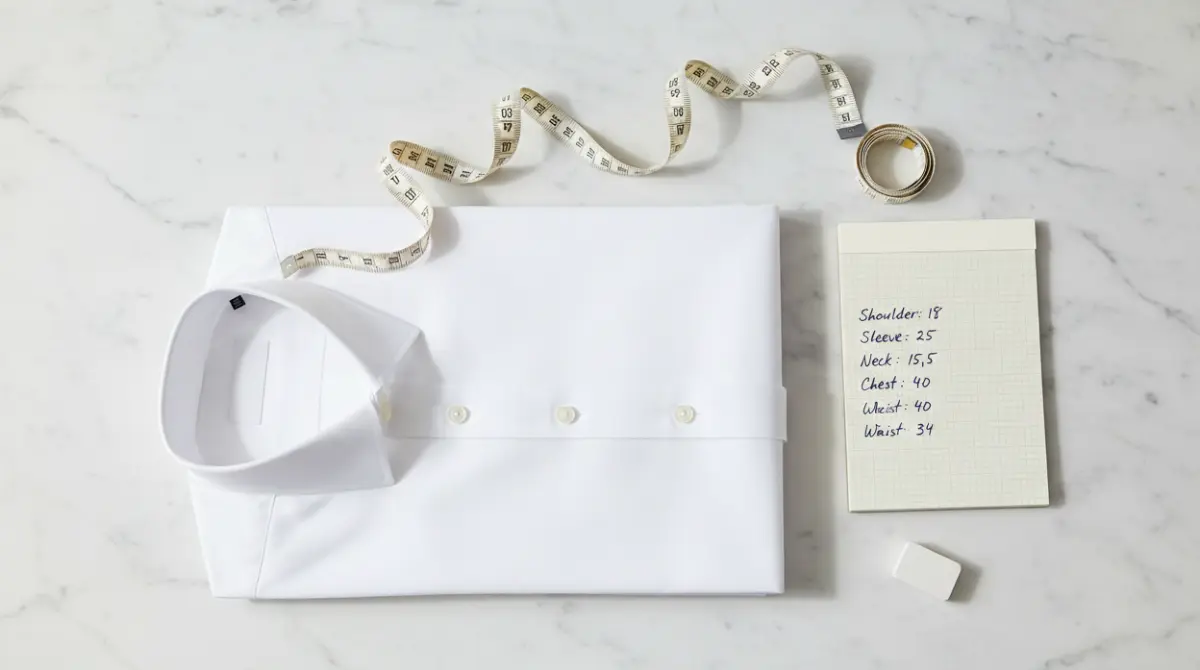
Getting a custom dress shirt right starts with clean measurements, not guesswork. A few minutes with the right tools can help you avoid tight collars, pulling buttons and sleeves that ride up.
This guide walks through each measurement in a practical order and explains what to watch for while you measure yourself at home. Use it any time you order a made-to-measure shirt or submit sizes to a tailor.
Why Accurate Shirt Measurements Matter?
A dress shirt is built from fixed points such as neck, shoulders and sleeve length. If one key number is off, the whole garment can look and feel wrong, even when the fabric and pattern are excellent.
Accurate measurements also help the maker choose the right ease, which is the small amount of extra room that allows movement. Better numbers mean less alteration, fewer remakes and a cleaner drape across the chest and back.
What You Need Before Measuring Yourself At Home?
Use a flexible tailor’s tape, stand in front of a mirror and wear a thin T-shirt or measure on bare skin. Keep your posture natural, with shoulders relaxed and arms down unless the measurement requires otherwise.
If possible, ask someone to help with shoulder and sleeve measurements, since those are hardest to keep level by yourself. Measure on a flat floor, avoid thick clothing and record everything in the same unit.
- Soft measuring tape. A cloth or fiberglass tape follows body contours without bending like a metal tape.
- Mirror and good lighting. Helps you keep the tape level and avoid twisting.
- Notepad or phone notes. Record each number immediately to prevent mix-ups.
- A well-fitting shirt as a reference. Useful for checking shirt length and sleeve balance, without copying sizes blindly.
Once tools are ready, take measurements at a calm pace and repeat each one to confirm consistency.
How To Measure Your Neck For A Custom Dress Shirt?
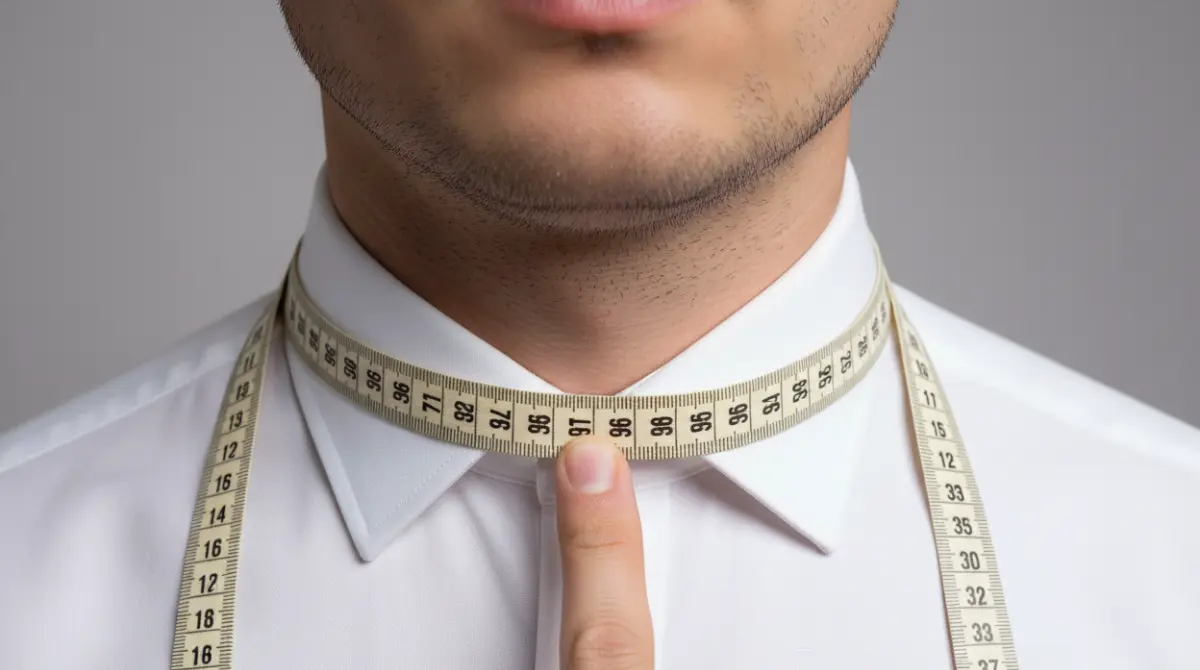
Wrap the tape around the base of your neck where a collar naturally sits, not high under the jaw. Keep the tape snug but not tight and make sure it stays level all the way around.
Slide one finger under the tape before reading the number to allow comfortable breathing and collar movement. Write the measurement down, then recheck it once more to confirm.
How To Measure Your Chest Correctly?
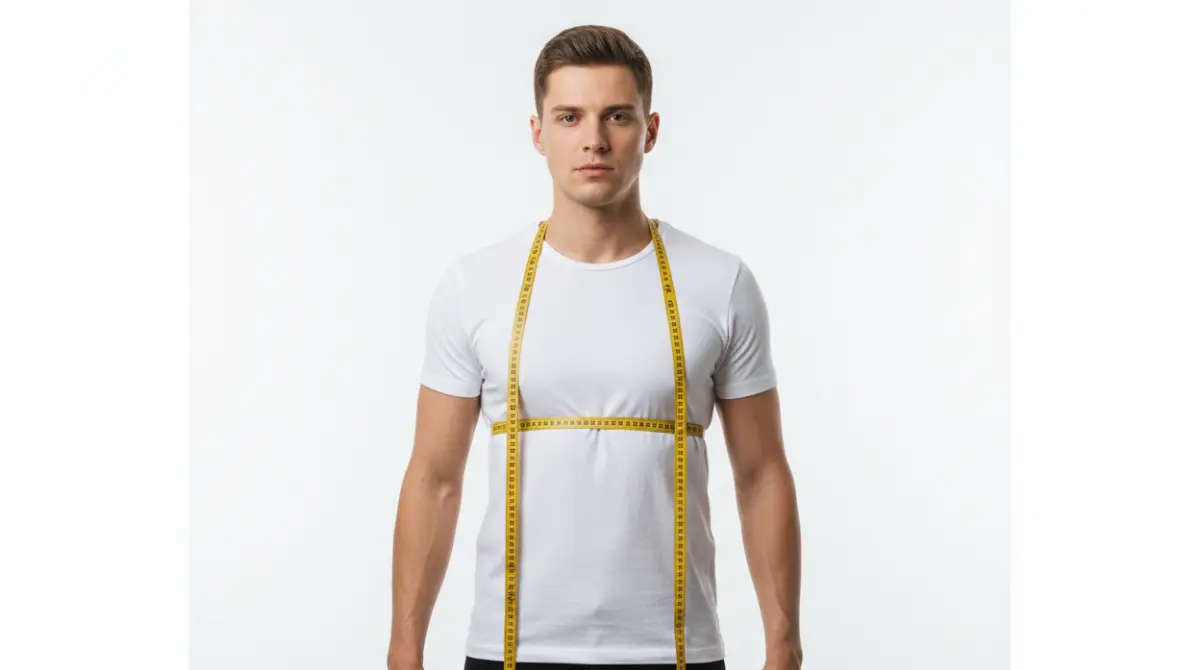
Stand tall and wrap the tape around the fullest part of your chest, usually across the nipples and shoulder blades. Keep your arms relaxed at your sides and avoid puffing the chest or holding your breath.
Make sure the tape is parallel to the floor and not dipping in the back. Read the number at a normal exhale so the shirt will fit comfortably during daily movement.
How To Measure Your Waist For The Right Shirt Fit?
Find your natural waist where your torso bends when you lean slightly to one side. Wrap the tape around that line, keeping it level and comfortably snug.
Do not measure over a belt or thick waistband, since it can add bulk and distort the reading. If you prefer a tapered shirt, accurate waist size is essential to avoid pulling at the buttons.
How To Measure Your Shoulders Accurately?
Shoulder width is best taken from shoulder point to shoulder point across the upper back. The shoulder point is the bony edge where the shoulder meets the arm, not the end of the collar seam on a random shirt.
If measuring alone, use a mirror to ensure the tape stays straight across your back. A helper can place the tape precisely and prevent it from sliding forward.
How To Measure Sleeve Length At Home?
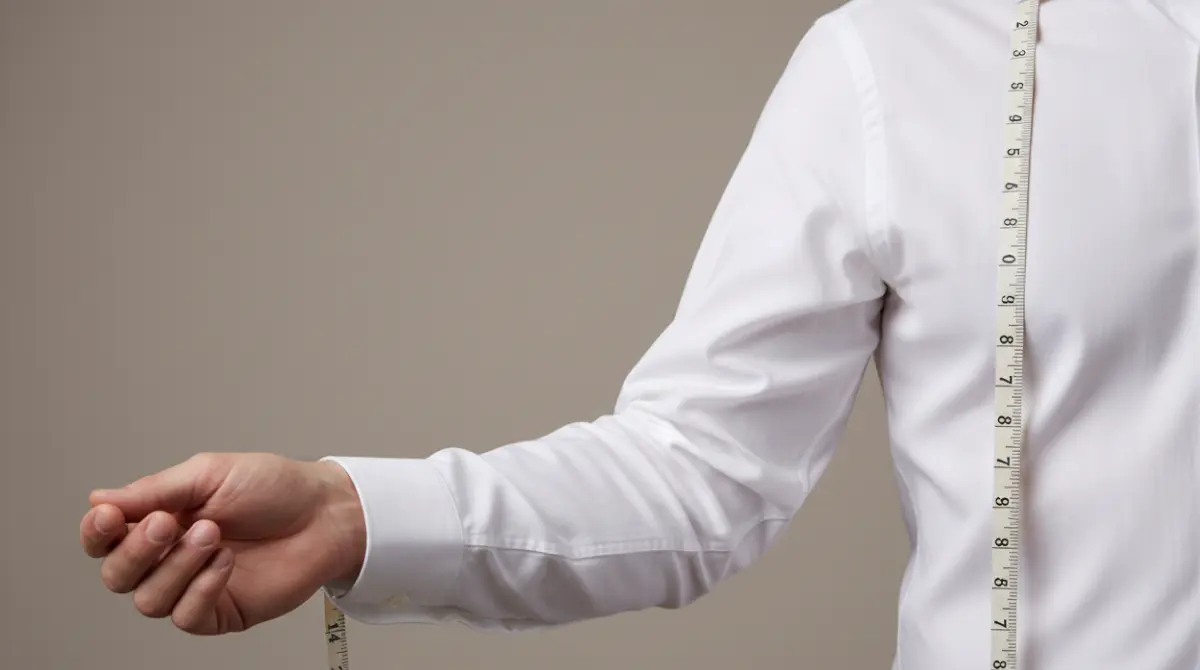
Sleeve length depends on where the shoulder seam should sit and where you want the cuff to land. Start the tape at the shoulder point, run it over the outside of the arm and stop at the wrist bone where the cuff should end.
Keep your arm slightly bent, since sleeves must accommodate movement. If you wear a watch often, keep that in mind so the cuff does not catch or ride up.
- Set Your Shoulder Point. Locate the bony edge at the top of the arm and start the tape there.
- Measure With A Soft Bend. Bend the elbow a little and keep the tape close to the arm without pulling.
- Finish At The Wrist Bone. Stop at the wrist bone or preferred cuff landing point and record the number.
After you record sleeve length, compare both arms if you suspect a difference and submit the larger number if required.
How To Measure Shirt Length Properly?
Shirt length affects whether the hem stays tucked and how the shirt looks untucked. Measure from the base of the neck at the back, where the collar meets the body, straight down the spine to your preferred hem point.
For a tucked dress shirt, the hem typically needs extra length so it stays in place when you raise your arms. For an untucked style, keep the length shorter and even, but still long enough to cover the waistband cleanly.
How To Measure Your Biceps And Wrist?
Biceps and wrist measurements help the sleeve feel comfortable without excess fabric. Measure your biceps around the fullest part of the upper arm with the muscle relaxed, keeping the tape level and not tight.
Measure the wrist around the bone where a cuff would close, then add enough comfort so it does not pinch. Many custom shirt forms build ease into these areas, so accurate raw numbers are more useful than guessing extra room.
Measurement Reference Table
Use this table to keep your notes organized and to double-check where each measurement is taken. Staying consistent with landmarks reduces mistakes when you submit your sizes.
| Measurement | Where To Place The Tape | Fit Check |
|---|---|---|
| Neck | Base of neck where collar sits | One finger fits under tape |
| Chest | Fullest part of chest and shoulder blades | Tape stays level on back |
| Waist | Natural waist at torso bend point | Snug without compressing |
| Sleeve Length | Shoulder point to wrist bone over outside arm | Measure with slight elbow bend |
With your core numbers recorded, focus next on avoiding the common errors that lead to poor fit.
Common Mistakes To Avoid When Taking Shirt Measurements
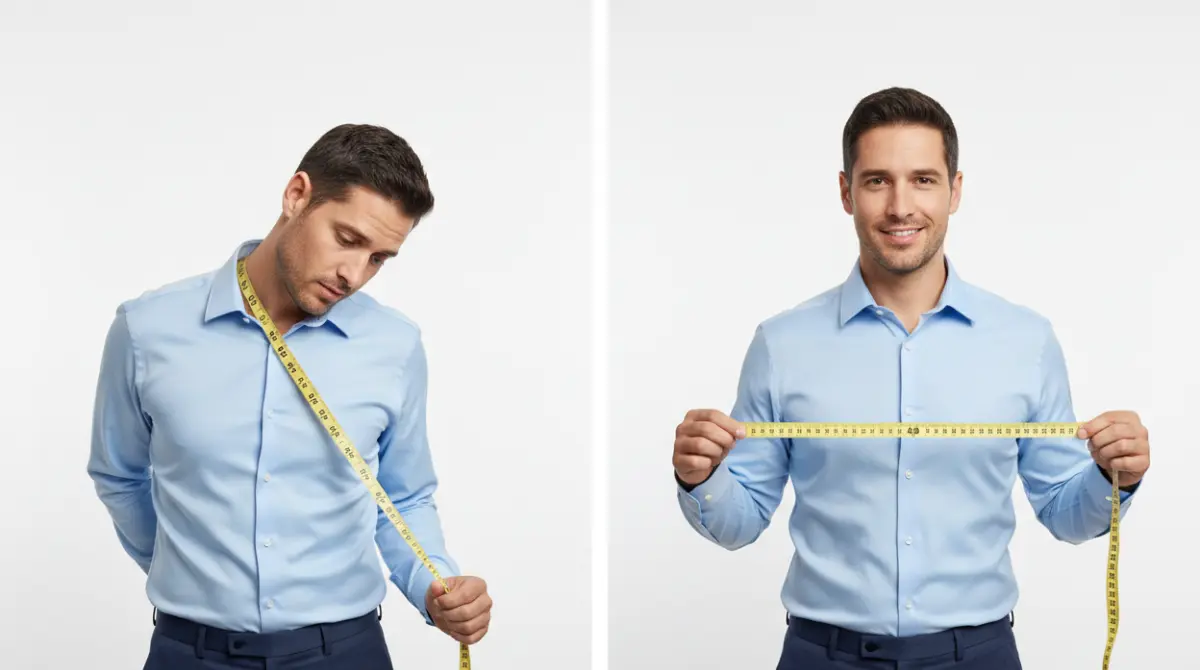
Most measurement issues come from tape placement and posture, not from the tape itself. Rushing the process or measuring over bulky clothing can change results enough to affect the final shirt.
- Measuring too tight. Tight tape produces a restrictive collar, narrow chest and sleeves that bind when you move.
- Letting the tape angle. A dipped tape inflates chest or waist numbers and creates a baggy fit.
- Using random shirt specs. Tag size and brand patterns vary, so copying them often gives mismatched proportions.
- Holding your breath. Inflates chest size and can cause button strain when you breathe normally.
- Skipping a second pass. Repeating each measurement catches simple errors and improves reliability.
Correcting these issues early makes the next set of fit decisions much easier.
Tips To Get The Best Fit For A Custom Dress Shirt
Measurements are the foundation, but fit preferences matter too. Think about how you wear dress shirts, including how much you move, whether you tuck in and what layers you wear on top.
If the order form asks for fit style, choose based on comfort first and silhouette second. A clean line through the torso should still allow you to reach forward, sit and raise your arms without pulling.
- Measure at the same time of day. Body measurements can shift slightly, so consistency helps.
- Stand naturally. Avoid forcing shoulders back or sucking in your stomach.
- Use consistent landmarks. Always return to the same neck base, shoulder points and wrist bone.
- Note posture details. If you have sloped shoulders or a forward neck posture, mention it if the maker allows notes.
- Check collar comfort needs. If you wear a tie daily, a precise neck fit matters more than if you go open-collar.
Once you settle on your preferred ease and silhouette, do a final review before submitting.
Final Checklist Before Submitting Your Measurements
Before you send your numbers, confirm that each measurement is clear, consistent and in the correct unit. This small review prevents the most common ordering problems, especially when switching between inches and centimeters.
- Confirm Units. Make sure every measurement uses the same unit and matches the order form.
- Repeat Key Points. Recheck neck, chest, shoulders and sleeve length once to verify accuracy.
- Keep Notes Organized. Label each number clearly so neck is not confused with chest or waist.
- Review Fit Preferences. Select the intended fit option and add any allowed notes on comfort or posture.
- Submit Clean Numbers. Avoid rounding aggressively unless the maker requests it and keep the values precise.
This final pass improves accuracy and reduces the chance of a shirt that needs major alterations.
Conclusion
Measuring yourself for a custom dress shirt at home is straightforward when you use the right landmarks and keep the tape level. Focus on neck, chest, waist, shoulders, sleeve length, shirt length and arm measurements, then double-check each number.
Accurate measurements lead to a cleaner fit, better comfort and a shirt that looks intentional from collar to cuff. Take your time, record carefully and submit with confidence.